rarefruittrees.ae
Bilimbi (Averrhoa bilimbi) - Air Layer - LIVE PLANT
Bilimbi (Averrhoa bilimbi) - Air Layer - LIVE PLANT
Couldn't load pickup availability
Plant Insights and Care
Bilimbi (Averrhoa bilimbi), also known as the Cucumber Tree or Tree Sorrel, is a fast-growing tropical fruit tree closely related to the starfruit (Averrhoa carambola). It is native to Southeast Asia and is highly valued for its prolific production of crisp, acidic fruits that are widely used in cooking, pickling, and beverages.
Bilimbi grows into a small to medium-sized tree, typically reaching 5–10 meters in height, with an open canopy and attractive, feathery foliage. In the UAE, it performs exceptionally well in warm conditions provided it receives consistent irrigation and organic-rich soil. Young trees benefit from light afternoon shade during the hottest months (40–45°C), while mature trees can tolerate full sun with adequate watering and mulching.
The tree prefers well-draining, fertile loamy soil with a slightly acidic to neutral pH (5.5–7.0). Since UAE soils are naturally sandy, incorporating generous amounts of compost or well-rotted manure will significantly improve moisture retention and tree performance. Deep watering is essential, particularly during flowering and fruit development. Applying a thick layer of mulch helps keep the root zone cool and reduces evaporation during the summer.
Bilimbi is a heavy producer and responds well to regular feeding. Apply a balanced fruit tree fertilizer every 6–8 weeks during the growing season, increasing potassium during flowering and fruit development. Light annual pruning improves air circulation, controls tree size, and makes harvesting easier.
Key Points:
- Origin: Indonesia and Malaysia.
- Climate: Tropical; thrives in hot climates with regular irrigation.
- Sun Exposure: Full sun; young trees benefit from afternoon shade during peak summer.
- Watering: Deep, regular watering; maintain consistent soil moisture without waterlogging.
- Soil: Fertile, well-draining loam enriched with organic matter; pH 5.5–7.0.
- Fertilization: Balanced fertilizer every 6–8 weeks; increase potassium during fruiting.
- Pruning: Light annual pruning to maintain shape and improve airflow.
- Growth Rate: Fast-growing; grafted trees typically fruit in 2–3 years, while seedlings usually begin fruiting in 4–6 years.
Fruit Profile
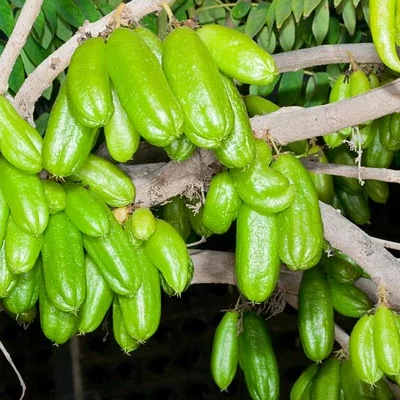
Bilimbi fruits grow in large clusters directly from the trunk and older branches, giving the tree a spectacular appearance when in production. The fruits are smooth, elongated, and bright green, measuring approximately 5–10 cm long. As they ripen, they may develop a pale yellow-green colour but generally remain green when harvested.
The flesh is extremely juicy and intensely acidic, with an acidity similar to or even greater than lemons. Because of this, Bilimbi is rarely eaten fresh but is highly prized for making pickles, chutneys, curries, juices, preserves, and refreshing drinks. It is also commonly used as a natural souring agent in Southeast Asian cuisine.
Dive into the facts:
- Taste: Intensely sour, crisp, and refreshing with strong citrus-like acidity.
- Appearance: Smooth, elongated bright green fruits growing in dense clusters along the trunk and main branches.
- Fun Fact: Bilimbi is one of the few fruit trees that produces fruit directly on its trunk (cauliflory), allowing mature trees to become completely covered in hundreds of fruits during peak production.
Share