1
/
of
1
rarefruittrees.ae
Papaya ‘Red Maradol’ (Carica papaya) - LIVE PLANT
Papaya ‘Red Maradol’ (Carica papaya) - LIVE PLANT
Regular price
Dhs. 150.00 AED
Regular price
Sale price
Dhs. 150.00 AED
Unit price
/
per
Shipping calculated at checkout.
Couldn't load pickup availability
Plant Insights and Care
Propagation Type: Air Layer (air-layered).
Papaya ‘Red Maradol’ is listed under Carica papaya. The guidance below covers growing the plant; flowering and harvest depend on local conditions.
- Sun Exposure: Choose a bright, sunny, wind-sheltered position. Acclimatise nursery plants gradually and protect newly planted roots from overheating.
- Watering: Water thoroughly, then allow excess water to drain. Keep moisture reasonably steady during growth and fruit development; persistent saturation can damage roots.
- Soil: Use a fertile, freely draining root zone. Avoid deep planting and low spots that collect irrigation water.
- Temperature and Humidity: Papaya needs warmth and is cold sensitive. Very hot weather can disrupt flowers and fruit set; 40–45°C is not a reliable production range.
- Fertilization: Use small, regular applications of a balanced feed during active growth. In alkaline soil, investigate micronutrient deficiency before increasing fertilizer.
- Pruning: Remove dead or diseased leaves without injuring the trunk. Routine topping is unnecessary and may expose the soft stem to decay.
- Growth Rate and Size: A fast-growing, soft-stemmed perennial that can become several metres tall. Fruiting height and timing depend on the selection and growing conditions.
- Pollination: Papayas may be male, female or hermaphrodite. Female flowers need a pollen source; hermaphrodite flowers can self-pollinate. Plant sex is not guaranteed by a variety name alone.
Key Points
- Protect the soft stem and shallow roots from damage.
- Good drainage is essential.
- Confirm flower sex before relying on a single plant for fruit.
Fruit Profile
Maradol papayas are known for substantial fruit with orange-red flesh and a central seed cavity. The skin develops yellow colour during ripening, and the flesh should soften before eating.
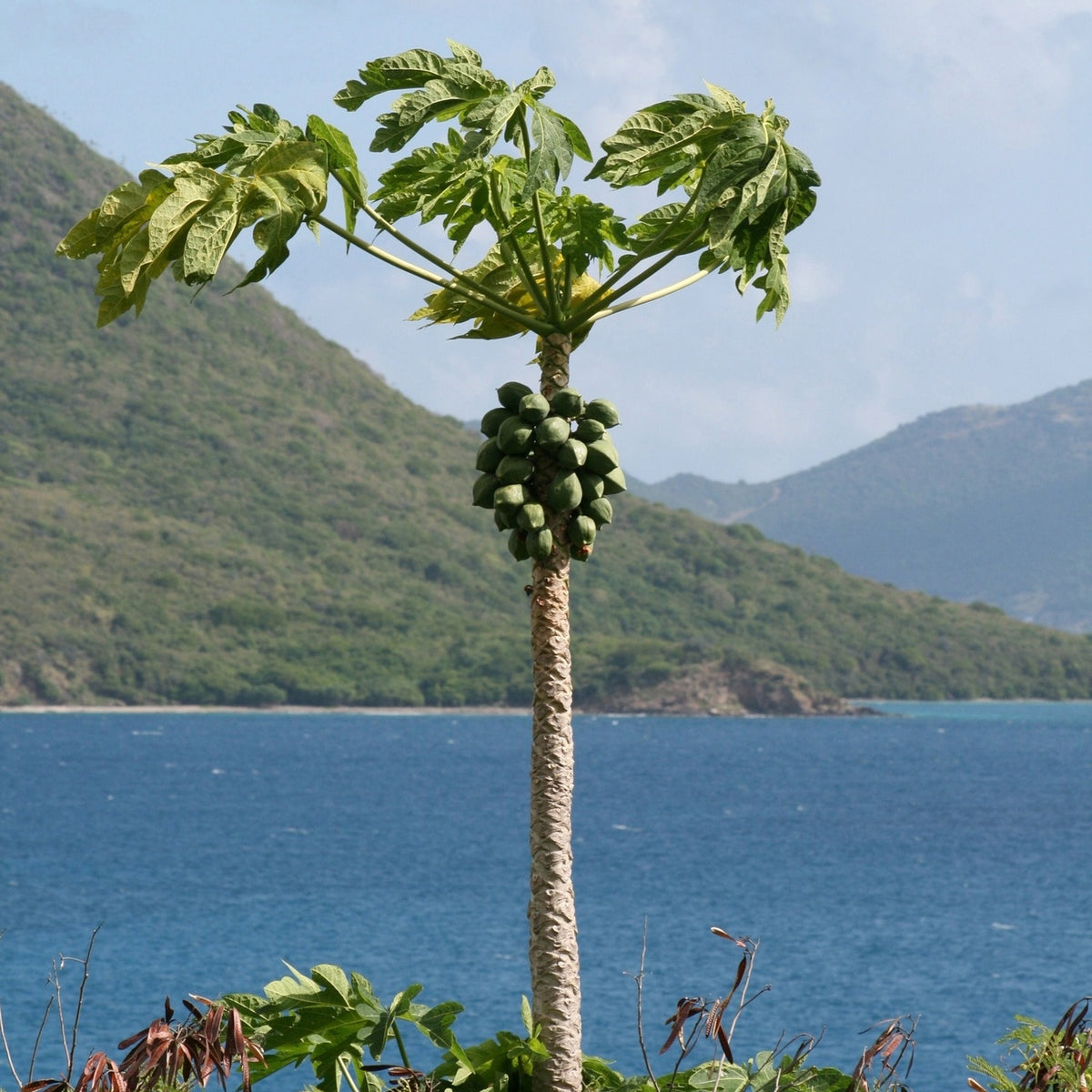
Photographs include species reference images; they do not show the exact plant supplied or confirm this cultivar’s fruit appearance.
Share