rarefruittrees.ae
Wood Apple / Bael (Aegle marmelos) - Seedling - LIVE PLANT
Wood Apple / Bael (Aegle marmelos) - Seedling - LIVE PLANT
Couldn't load pickup availability
Plant Insights and Care
Propagation Type: Seedling (grown from seed).
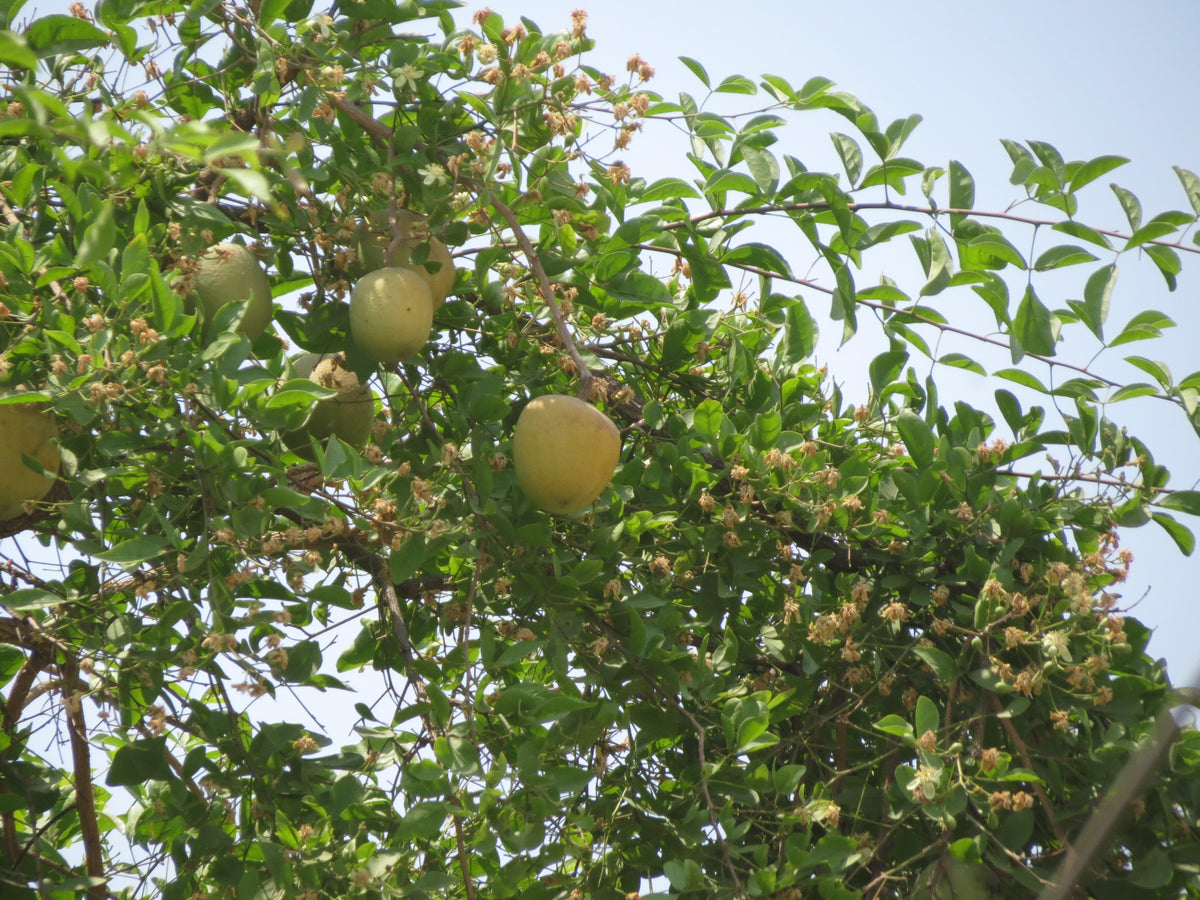
Wood Apple, also known as Bael or Bengal Quince, is Aegle marmelos. It is a deciduous fruit tree with aromatic foliage, sometimes thorny branches and hard-shelled fruit containing orange pulp.
- Sun Exposure: Choose a sunny position and acclimatise nursery plants gradually. Give newly planted trees temporary shelter if they are moved into intense summer exposure.
- Watering: Water young trees thoroughly and allow excess water to drain. Established bael tolerates dry conditions, but a small nursery root ball should not be allowed to dry out severely. Adjust irrigation to soil moisture, the season and whether the tree is actively growing or carrying fruit.
- Soil: Bael adapts to a range of soils, including alkaline conditions. A well-drained root zone with some organic matter supports establishment. In containers, keep drainage holes clear and avoid compacted, permanently saturated growing media.
- Temperature and Humidity: The species grows in regions with very hot summers and a pronounced dry season. Established trees can tolerate substantial heat, but 40–45°C weather still calls for careful irrigation and root protection in young or container-grown plants. Heat tolerance alone does not establish local yield or fruit quality.
- Fertilization: Feed modestly during active growth, increasing only as the canopy develops. Base further feeding on leaf condition and soil fertility; avoid heavy applications to a dry or stressed plant.
- Pruning: Develop a sound framework while the tree is young. Remove dead, damaged and crossing branches, and trim unwanted suckers. Wear gloves around thorny growth and avoid unnecessary heavy pruning.
- Growth Rate and Size: Generally slow to moderate growing, eventually reaching around 12–15 m in favourable in-ground conditions. Seedlings can take several years to fruit and may vary in fruit quality. Seasonal leaf shedding can be part of its normal growth cycle.
- Pollination: Bees and other insects visit the flowers. Studies have found poor self-pollination or self-incompatibility in bael, so plan for cross-pollination from a genetically different bael flowering at the same time. A second compatible tree and insect access improve the opportunity for fruit set but do not guarantee a crop.
Key Points
- Well suited to a sunny planting position, with reliable watering during establishment.
- Allow for a substantial tree and occasional thorny growth.
- Cross-pollination matters; do not rely on an isolated seedling for dependable fruiting.
Fruit Profile
Bael fruit is round to oval with a woody rind that changes from green towards yellow as it matures. Inside is aromatic yellow-orange to orange pulp surrounding seeds and sticky mucilage. The pulp is usually thick and sweet, with a resinous character and varying astringency; seedling fruit can differ considerably. The shell remains firm, so softness of the outside is not a reliable ripeness test. Open a mature fruit carefully, separate the pulp from the seeds and shell fragments, and use it fresh or in drinks, preserves and desserts.
Share